
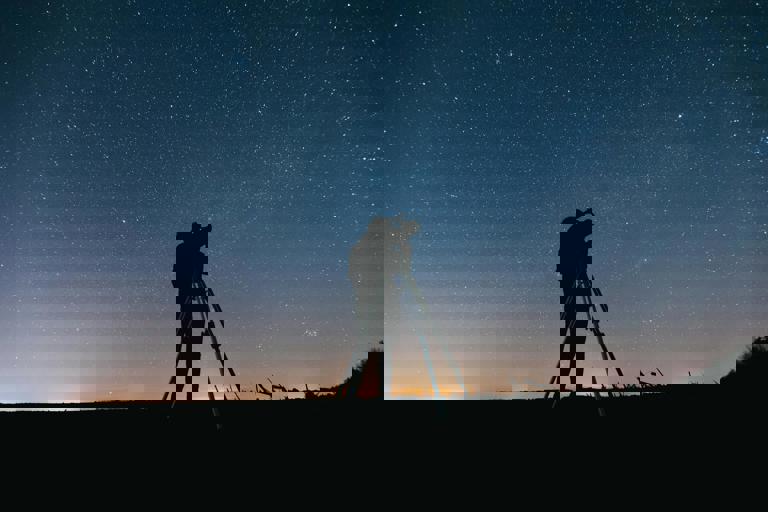
Hundreds of residents gathered under the night sky this week for the highly anticipated Midnight Astronomy Watch in the city’s central park. The event, organised by the local Astronomical Society, invited stargazers of all ages to witness an extraordinary planetary alignment rarely visible in urban settings. Excitement was palpable as families, amateur enthusiasts, and seasoned astronomers set up their telescopes in anticipation of the spectacle.
The celestial event featured a rare alignment of five planets—Mercury, Venus, Mars, Jupiter, and Saturn—forming a straight line across the horizon. According to Dr. Helena Parry, an astrophysicist and guest speaker at the event, "Such alignments are infrequent and offer an incredible opportunity for learning and inspiration, particularly for young people." As darkness fell, the first glimpses of planets sparked murmurs of awe from the assembled crowd.
Telescopes of all sizes dotted the park’s open fields, some lent by local observatories and others brought by dedicated hobbyists. Volunteers from the Astronomical Society offered guidance, helping newcomers adjust their instruments and identify the planets. Each station was equipped with star charts and informational leaflets, ensuring that even novices could locate the main points of interest in the night sky.
The event’s organisers placed a strong emphasis on accessibility and education. Special viewing platforms were arranged for children, and live commentary was provided throughout the night. "We wanted to make astronomy approachable for everyone," said society chairperson Michael Linton. "There’s a remarkable sense of community when people come together to share this kind of experience." The atmosphere was both lively and respectful as participants waited patiently for their turn at the telescopes.
Experts provided interactive talks on planetary science and the history of celestial events, engaging the audience with anecdotes and scientific insights. Dr. Parry explained how the alignment occurs due to the differing orbital paths of each planet around the sun. She also pointed out visible craters on the moon and described Galileo's early telescope observations, drawing parallels to the technology used during the event.
Local schools were well represented, with several science teachers bringing groups of students for what they described as an unrivalled learning opportunity outside the classroom. Thirteen-year-old Jasmine Edwards, attending with her science club, said, "It’s amazing to see the planets for real rather than in pictures. I think I’d like to study astronomy more now." Her sentiment was echoed by many young attendees, who left the event inspired by the cosmos.
Notably, the event drew attention from the British Astronomical Association, which commended the community-focused approach. Statistics provided by the society suggested a turnout of over 600 people, making it one of the largest astronomy gatherings in the city’s recent memory. The diversity of attendees reflected a growing interest in science events accessible to the wider public and families.
For photographers, the planetary alignment was a rare treat. Several semi-professional photographers arranged special equipment to capture long-exposure shots of the night sky. Attendee Mark Davidson, a keen astrophotographer, shared, "Photography of these events is challenging due to ambient city lights, but tonight’s clear skies made all the difference." Many attendees swapped stories about stargazing trips and shared tips on astrophotography techniques.
The Midnight Astronomy Watch was also an opportunity to promote responsible environmental practices. Organisers ensured the event was litter-free, providing recycling stations throughout the park. Red-tinted torches were distributed to preserve night vision and avoid light pollution, a thoughtful touch praised by both amateur and experienced sky watchers. The society stressed the importance of keeping urban spaces welcoming for both residents and stargazing activities.
Safety played a vital role in the event’s planning and execution. Stewards circulated among the crowd, offering advice on moving safely in low light and keeping pathways clear. Emergency medical services were quietly present, though their assistance fortunately went unused. City council representatives praised the smooth and inclusive operation, noting its value in fostering community engagement in public spaces after dark.
As the alignment reached its peak just after midnight, a sense of wonder swept through the crowd. Couples, friends, and families stood together, sharing moments of reflection under the star-studded sky. Organiser Michael Linton reflected, "Events like this remind us how much there is still to explore, right above our heads—and how science can bring a community together in a moment of awe."
Many participants lingered long into the early hours, exchanging their impressions and ideas for future gatherings. The success of the event sparked discussions about hosting regular astronomy nights, particularly around significant celestial events marked in the society’s calendar. The organisers encouraged feedback and suggestions, inviting anyone interested in astronomy to join upcoming workshops or volunteer for future events within the city’s vibrant science community network. Looking ahead, both organisers and attendees expressed hope that the excitement generated would inspire more public science events in the months to come, further blending enjoyment with education for all residents involved.